
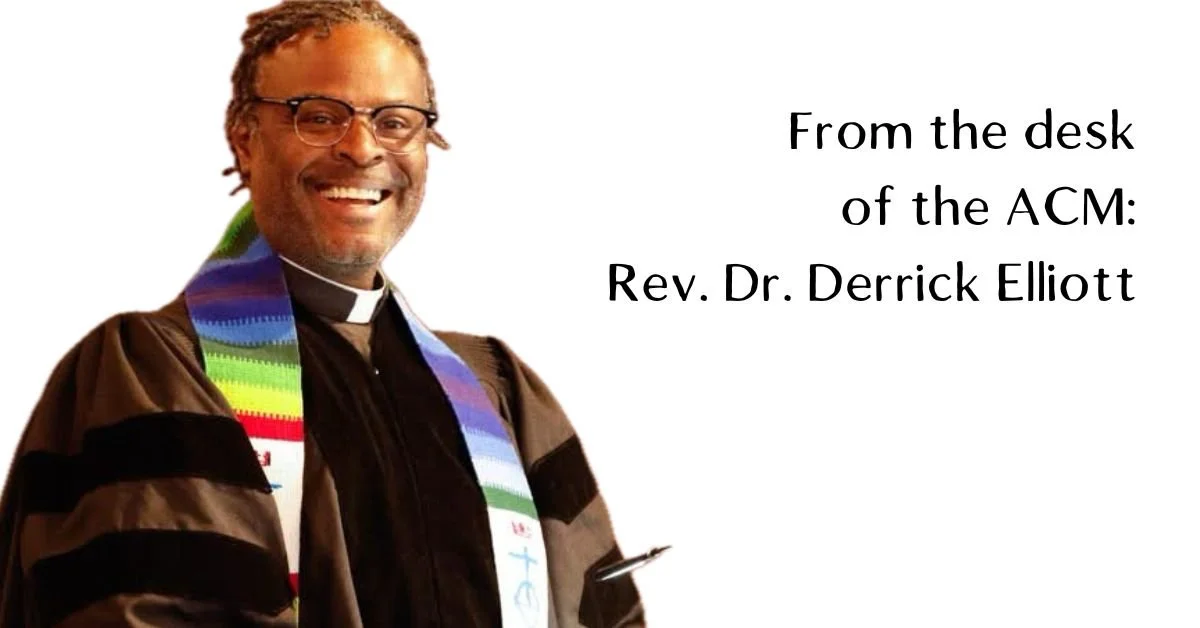
by Rev. Dr. Derrick Elliott
In May 2024, I stepped into the title Rev. Dr. Derrick Elliott. Hearing it spoken aloud felt unusual at first. Titles can sound formal until you begin to feel the story they carry. Over time, I realized this title connected me to a long line of Black folks who have used names, roles, and language to speak dignity into life when the world would not.
During the First Week of Advent, we light the candle of Hope. Hope asks something of us. It calls us to practice it, speak it, and live it. In many ways, Black honorifics grew out of that same work.
During and after slavery, when society denied dignity by law and custom, Black communities created their own ways of honoring one another. Titles like Brother, Sister, Mother, and Elder said, You matter. You belong. Your life holds worth. These words became more than polite forms of address. They were tools for survival. They had communities together and kept hope alive.
In that sense, Black honorifics already carried the spirit of Advent: a way of expecting a better world and preparing for it, even when the present moment looked bleak. Black churches continued this practice with care. Titles such as Reverend, Pastor, Deacon, and Mother of the Church recognized calling, wisdom, and responsibility. These titles didn’t build hierarchies. They built trust. They made room for service and leadership and reminded the community that God works through each of us. Just as Advent invites us to prepare a place for Christ, these titles ask us to prepare a place for one another.
The Civil Rights Movement carried this language into the struggle. Calling someone "Brother" or "Sister" created courage and unity. “Brother Malcolm,” “Sister Rosa,” and “Sister Fannie Lou” held titles that wrapped the community in a sense of belonging and shared purpose. Their honorifics served as reminders that we were tied to one another.
As a Black clergyperson, I’ve learned that titles do not function the same across racial lines. My white colleagues, and those who move easily in white-adjacent spaces, often get addressed by their first name without losing authority. They don’t have to wonder if informality will weaken how others see them.
Many Black leaders don’t receive that same cushion. Titles serve as a shield against dismissal or oversight. They help create a fair space in places where respect has never been evenly given. Using an honorific becomes an act of hope. It says, My calling deserves to be seen. My gifts deserve to be recognized. My work carries weight.
As I’ve grown into “Rev. Dr.,” I’ve come to see it as far more than a degree or achievement. It reminds me of the communities that raised me, the teachers who invested in me, and the ancestors who carved out possibilities they never lived to see. It also reminds me of the responsibility I carry now.
This brings me back to Advent. Advent points us toward the future God is shaping. Black honorifics help us remember the past and look with expectation toward the world we are building. Both call us to honor one another. Both ask us to live with hope. Both teach us to prepare the way.
So as we move through this First Week of Advent, I hold my title with gratitude; not because it lifts me up, but because it grounds me. Hope reminds us that God continues to name us, call us, and prepare us for what comes next.
May we honor each other with care this season. May we speak dignity into every life. And may we walk forward with hope, trusting that God’s new world is already breaking in among us.