
Hosted by Church of the Beatitudes, Phoenix
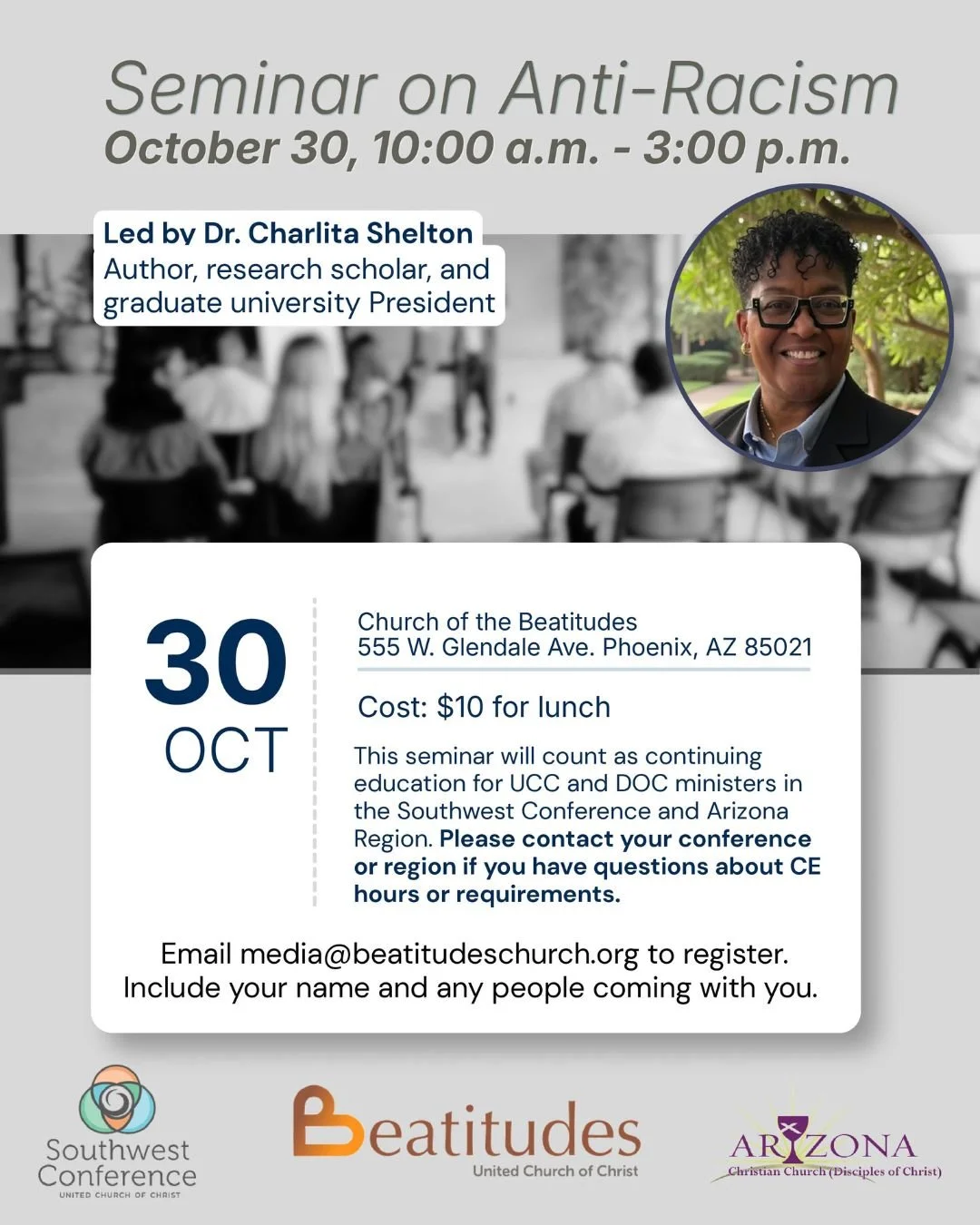
Southwest Conference clergy and lay leaders are warmly invited to a Seminar on Anti-Racism led by Dr. Charlita Shelton, author, research scholar, and graduate university president.
When: Friday, October 30, 10:00am to 3:00pm
Where: Church of the Beatitudes, 555 W. Glendale Ave., Phoenix, AZ
Cost: $10 for lunch
Register: Email your name (and the names of anyone attending with you) to media@beatitudeschurch.org
A note on standing requirements: This seminar offers four (4) hours of continuing education and may be counted toward your annual CE. It does not fulfill the Southwest Conference anti-racism training requirement for standing, which is a six (6) hour training. Clergy who need to complete their anti-racism requirement should plan to attend an approved SWC training. Please contact the Conference office if you have questions about your standing requirements.
About the seminar
This seminar offers a thoughtful, practical framework for understanding diversity, equity, inclusion, and anti-racism in today's complex social and political climate. Participants will examine the forces driving politicized opposition to DEI, distinguish between effective and ineffective DEI practices, and explore how faith leaders can respond with clarity, courage, and integrity.
Drawing on the Shared Equity Leadership Model, the seminar emphasizes that advancing equity and confronting racism are collective responsibilities, not duties assigned only to designated diversity leaders or historically marginalized people. Participants will consider how to embed shared accountability in congregational leadership, decision-making, ministry, and community engagement.
Dr. Shelton will also share from her own lived experience to illuminate intersectionality, helping participants understand how race, gender, sexual orientation, faith, and other aspects of identity shape experiences of belonging, exclusion, privilege, and discrimination.
Participants will grow in their ability to:
Understand the current political and cultural challenges surrounding DEI.
Distinguish meaningful, effective DEI work from approaches that may be performative, poorly designed, or counterproductive.
Recognize anti-racism and equity as shared leadership and ministry responsibilities.
Apply an intersectional perspective to pastoral care, congregational life, and community engagement.
Lead more courageous conversations about race, identity, privilege, inclusion, and belonging.
Translate DEI and anti-racism principles into informed, authentic, and sustainable action within their churches and communities.